
Why screening is the decision that costs the most
Across 40+ interviews with Canadian landlords, one mistake came up more than any other: placing a tenant without checking anything beyond a phone call and a good feeling. The cost was rarely one month's rent. It was months of stress, repairs, and a dispute nobody had documentation for.
Use screening as one part of a consistent applicant assessment. Explain what information you need and why, obtain the required consent, and follow the privacy and human-rights rules that apply to the rental. A report does not guarantee a future tenancy outcome.
What a Propsynk screening covers
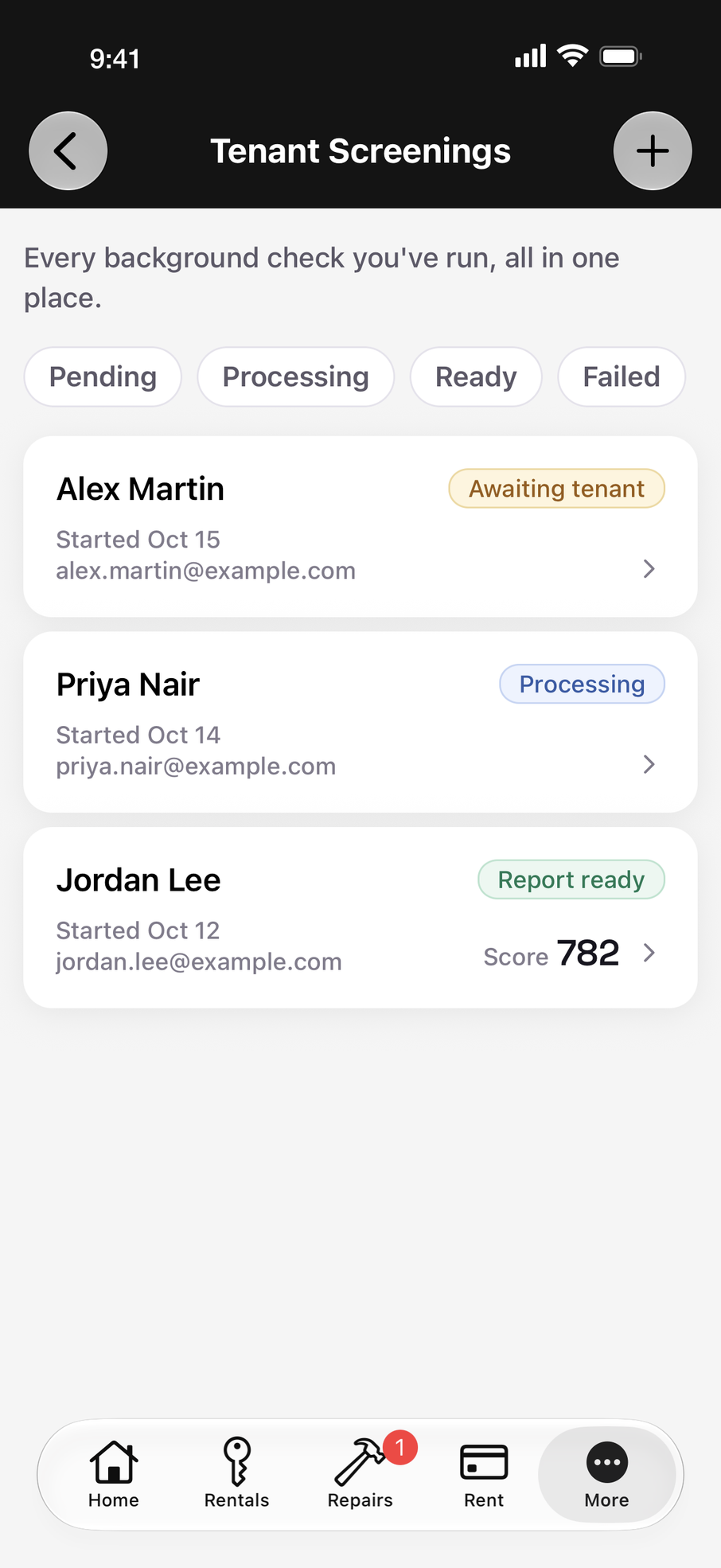
Screening runs through our screening partner and returns credit history, background checks and identity verification for the applicant. You see the status of every request move from pending to ready inside the app, next to the property and application it relates to.
SingleKey collects and prepares the screening. Propsynk receives the request status, applicant and transaction metadata, report links and a screening score when returned, and caches a completed report so the authorized landlord can continue to access it through the app.
What screening tells you, and what it doesn't
A screening report is evidence, not a verdict. Credit history tells you how someone has handled obligations in the past; it does not tell you whether they will be a good tenant, and a thin file is not the same as a bad one. Newcomers to Canada, students and people who have simply never carried debt can all screen thinly while being entirely reliable.
Treat the report as one input alongside references, employment and your own conversation. What it reliably does is surface the things you cannot find out by asking: undisclosed history, identity that does not match the application, and patterns the applicant chose not to mention.
Whatever criteria you use, apply the same ones to every applicant. Consistency protects you under human rights legislation, which applies to tenant selection, and it also produces better decisions than judging each application on instinct.
Keeping screening with the rest of the tenancy file
A screening result is only useful if you can find it later. In Propsynk it sits with the application, the signed lease, the deposit record and the rent ledger for that unit, so the full history of a tenancy is one place rather than five.
That matters most if a tenancy goes wrong. When you are assembling evidence for a hearing, the question is never whether you did things properly. It is whether you can show it.
It also matters for the ordinary case. A year into a tenancy, when you are deciding whether to renew, the whole record of how this started is still there rather than lost in an email account.
See how tenancy setup works, compare Free and Pro, or read every Canadian landlord workflow.