

Maintenance
Repairs that don't sit for three weeks.
Tenants report with photos, you triage and assign, and the whole thread stays timestamped against the property instead of scattered across texts.
Your first rental free · No credit card · See pricing
Why repairs stall
It is almost never that the landlord does not care. It is that a request arrives as a text at an inconvenient moment, the contractor search starts from scratch every time, and there is no single place showing what is still open.
Landlords told us issues would sit for weeks purely because finding a reliable trade quickly was hard, and both sides ended up frustrated by a delay neither wanted.
From reported to resolved in one thread
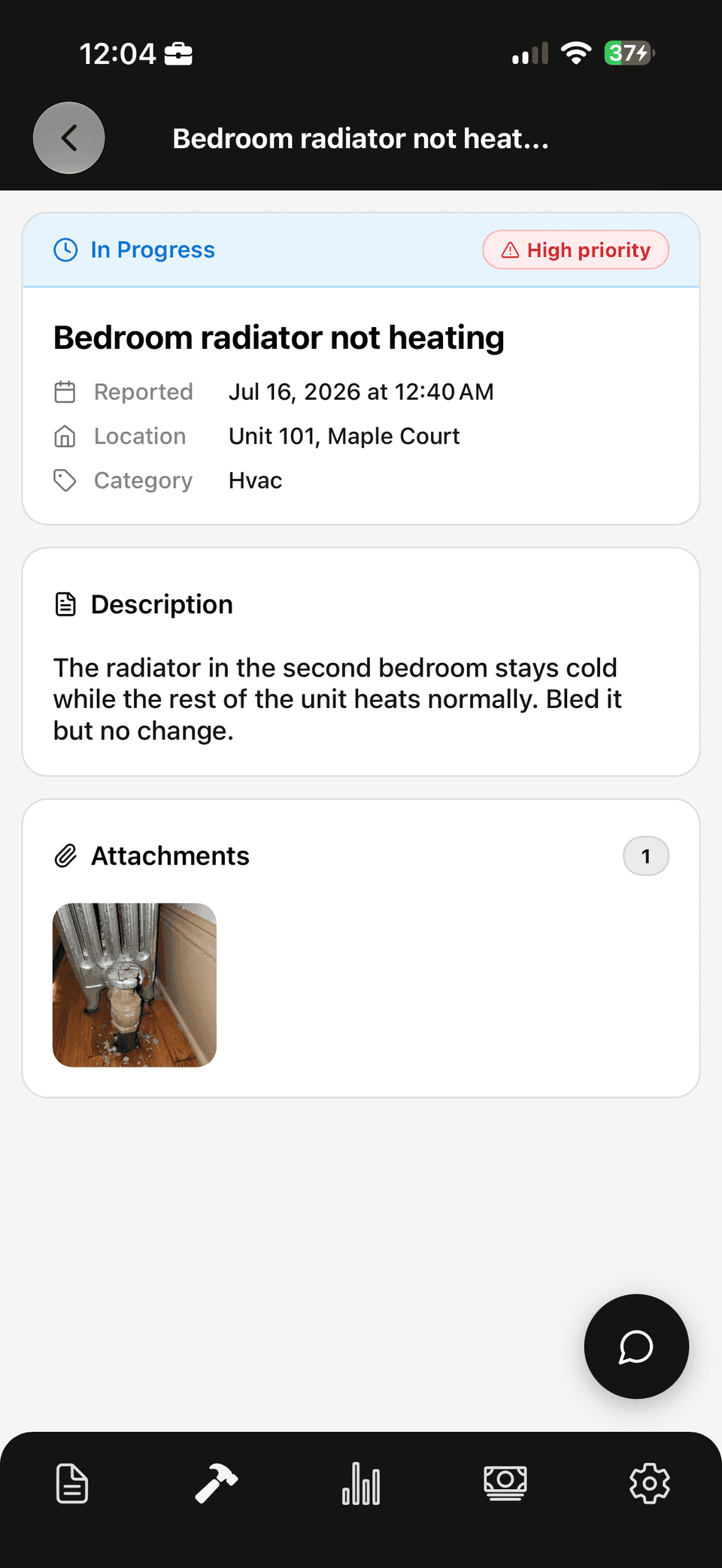
Tenants submit a request with photos, so you can judge urgency without a site visit. You set priority and category, assign a contractor, and follow the job through to resolved.
Messages about the request stay attached to the request. One timestamped thread beats a pile of screenshots when you are trying to reconstruct who agreed to what.
Triage is the part that saves the money
Not every request is urgent, and treating them all the same is how genuinely urgent things get lost. A blocked drain, a failing lock and a dripping tap need three different responses, and the difference is usually obvious from a photo.
Setting a priority and category at the moment the request arrives means the list stays meaningful. It also creates the record that you assessed the issue promptly, which matters if a tenant later claims a repair was ignored.
The expensive failures landlords described to us were almost always small problems that waited: a slow leak that became a floor, a loose fitting that became a claim. Triage is what stops the queue from hiding them.
The maintenance record is dispute evidence
A request logged on the 3rd, a contractor assigned on the 4th, and work completed on the 7th is a complete answer to an allegation of neglect. The same three facts spread across a text thread, a phone call and an invoice in your email are not.
Because the conversation stays attached to the request, the context survives too — what the tenant reported, what you agreed, and what actually happened.
Contractors and job payments
Pro includes finding, booking and paying a contractor through Propsynk, so a trade is not a fresh problem every time something breaks. Contractor and maintenance job payments are processed through Stripe. Review the contractor's profile, credentials, insurance and suitability before authorizing access or work.
For maintenance access, Propsynk can prepare a written entry notice with the reason, date and time and send it to your tenant to sign. The dated confirmation is filed against the tenancy. You remain responsible for confirming the notice, timing and service method required in your province.
What you get
In the app, on day one.
Photo reports
Tenants show you the problem instead of describing it.
Priority & category
Triage what is urgent and what can wait.
Contractor assignment
Assign the job and track it through to resolved.
One message thread
Timestamped conversation attached to the request.
Book a contractor
Find, book and pay a contractor through Propsynk (Pro).
Signed entry notice
Written notice of entry, signed and dated by your tenant.
Questions
Maintenance, answered.
Can tenants submit maintenance requests without paying?
Yes. Tenants are invited to the tenancy and can submit requests with photos at no cost to them.
Is maintenance logging on the free plan?
Yes. Maintenance requests, photos and tenant messaging are included with your first rental, free forever. Finding, booking and paying a contractor is a Pro feature.
How are contractors paid?
Contractor and maintenance job payments are processed through Stripe.
Can I set priority on a maintenance request?
Yes. You set priority and category when the request arrives, which keeps the open list meaningful and records that you assessed the issue promptly.
More on rent tracking and tenant screening, or read the guides for Canadian landlords.
Get started
Set your rental up once, and keep the record.
Your first active rental is free, forever.